
Diarrhoea and vomiting in children: ORS and danger signs
How to prevent dehydration with ORS when your child has diarrhoea or vomiting, what to feed, and the danger signs that need a doctor or emergency care.
 Medically reviewed by
Dr. K. Sushma
MBBS, DCH, DNB (Pediatrics)
Reviewed ·
3 min read
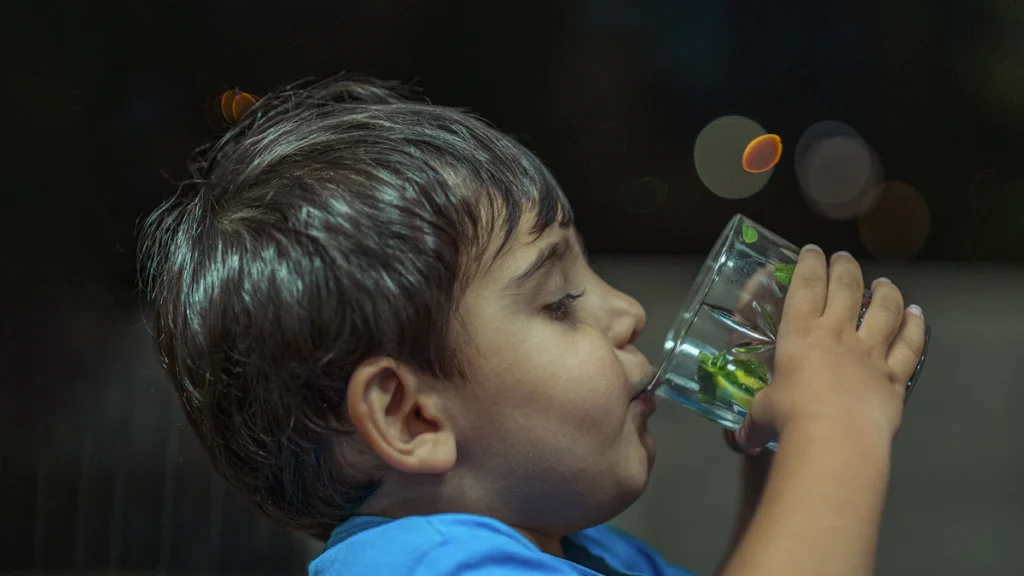
Diarrhoea (loose motions) and vomiting are common in children and are usually caused by a stomach infection that settles in a few days. The main risk is dehydration, losing too much water and salt, so giving enough fluids is the most important thing you can do.
Give ORS
- Use ORS (oral rehydration solution) from a pharmacy, mixed exactly as the packet says, with clean drinking water
- Give small sips often: a teaspoon every 1–2 minutes for a baby or toddler, more for an older child
- If your child vomits, wait 5–10 minutes, then start again slowly
- Offer ORS after every loose motion
- Make a fresh mix each day, and throw away what is left after 24 hours
Do not use glucose water, soft drinks or packaged fruit juice in place of ORS; they can make diarrhoea worse.
Feeding
- Keep breastfeeding or formula feeding, more often than usual
- Older children can eat normal, simple food once they feel like it: rice, dal, curd, idli, banana
- Zinc tablets or syrup may be prescribed by your pediatrician for children with diarrhoea
- Do not give medicines to stop diarrhoea or vomiting unless your pediatrician prescribes them
Book a pediatrician visit the same day if
- Your child is under 6 months old
- Vomiting lasts more than 24 hours, or diarrhoea more than 3 days
- Your child is not keeping down ORS or feeds
- There is a high fever, or severe tummy pain
- You are worried, even if you cannot say exactly why
Go to emergency straight away if your child
- Has blood in the motion or vomit, or green (bile) vomit
- Shows signs of dehydration: no urine for 8 hours, a very dry mouth, no tears, sunken eyes, or a sunken soft spot on a baby’s head
- Is very drowsy, hard to wake, floppy or confused
- Has fast breathing, or cold hands and feet with pale or mottled skin
- Has a swollen, hard tummy, or severe pain that does not settle
Call 108 or go to the nearest hospital emergency department. Anoki is an outpatient clinic, not an emergency service.
Stopping it spreading
- Wash hands with soap after nappy changes and toilet use, and before preparing food
- Use clean, boiled or filtered water for drinking and for mixing ORS
- Keep your child at home until 48 hours after the last episode of diarrhoea or vomiting
At the clinic
At Anoki, Dr. K. Sushma (MBBS, DCH, DNB Pediatrics) checks your child for dehydration, looks for the cause, and explains how much fluid to give and what to watch for at home.
Book a diarrhoea consultation, see the vomiting consultation, or all pediatric care at Anoki.
Our doctors explain
 Play video: Loose Stools in Kids: Hidden Danger Parents Ignore (Dehydration Signs) | Dr. Sushma
Loose Stools in Kids: Hidden Danger Parents Ignore (Dehydration Signs) | Dr. Sushma
Watch on YouTube Play video: When to Worry About Baby Poop? | Stool Colors & Red Flags Explained | Dr. Sushma
When to Worry About Baby Poop? | Stool Colors & Red Flags Explained | Dr. Sushma
Watch on YouTubeFrequently asked questions
Can I make ORS at home?
Ready-made ORS packets are best, because the salt and sugar amounts are exact. If you cannot get ORS, ask your pediatrician what to give until you can.
Should I stop milk when my child has diarrhoea?
No. Keep breastfeeding and usual milk feeds unless your pediatrician advises otherwise.
Does my child need antibiotics?
Most diarrhoea in children is caused by viruses, and antibiotics do not help. Your pediatrician will prescribe them only when they are needed.
This article is general health information and does not replace a consultation. If symptoms are sudden or severe, seek emergency care.