
Slipped disc: symptoms, and when surgery is needed
A slipped disc often improves without surgery. The common symptoms, what helps, when surgery is considered, and the warning signs that need emergency care.

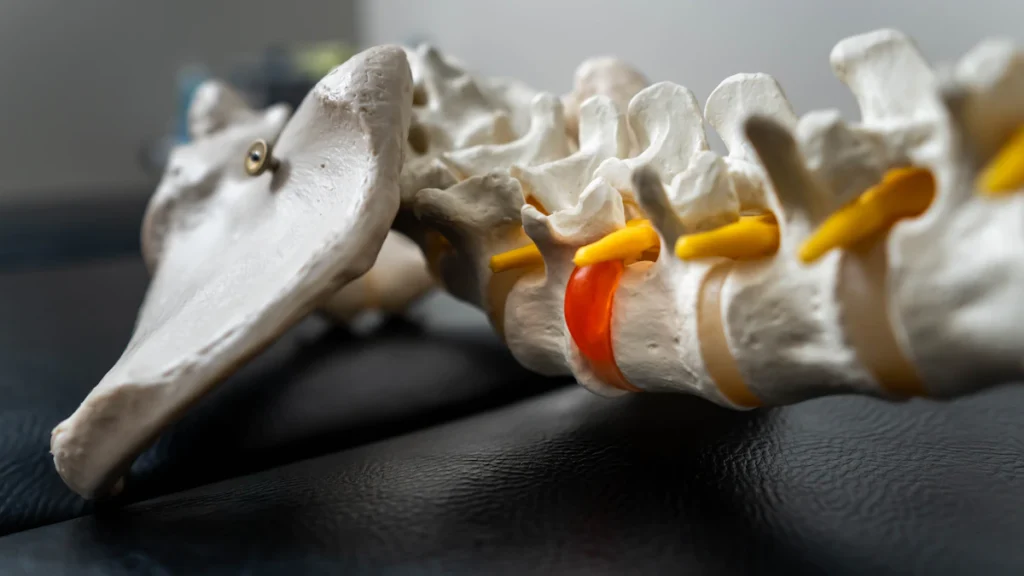
A slipped disc (also called a herniated or prolapsed disc) happens when the soft centre of a disc between the bones of the spine pushes out and presses on a nearby nerve. It is a common cause of back pain and leg pain, and most people get better without an operation.
Common symptoms
- Lower back pain, or neck pain if the disc is in the neck
- Pain that spreads down one leg (sciatica) or into one arm
- Numbness, tingling or a burning feeling in the leg, foot, arm or hand
- Weakness in the leg or arm, such as a foot that catches when you walk
- Pain that is worse when you sit, bend, cough or sneeze
What usually helps
- Staying gently active: short walks are better than long bed rest
- Pain medicines prescribed by your doctor
- Physiotherapy exercises once the worst pain settles
- Avoiding heavy lifting and long periods of sitting for a few weeks
For many people the pain eases over several weeks. A scan (usually MRI) is advised when symptoms are severe, do not improve, or there are nerve warning signs.
When surgery is considered
Surgery is an option, not a must. Your surgeon may discuss it when:
- Leg or arm pain stays severe despite several weeks of proper treatment
- Weakness in the leg or arm is getting worse
- The pain is stopping you from walking, working or sleeping
- There are emergency signs (below)
When surgery is needed, keyhole options such as endoscopic discectomy remove the part of the disc pressing on the nerve through a small cut. Your surgeon will explain whether it suits you, and the risks and recovery.
Go to emergency straight away if you notice
- Loss of bladder or bowel control, or difficulty passing urine
- Numbness between the legs or around the back passage
- Sudden weakness in both legs
- Back pain after a fall or accident, with fever, or with unexplained weight loss
Call 108 or go to the nearest hospital emergency department. Anoki is an outpatient clinic, not an emergency service.
At the clinic
At Anoki, Dr. Rajesh Pathi (MBBS, MS, MCh Neurosurgery) examines your back and nerves, reviews any scans, and explains whether treatment without surgery or a procedure suits you. Bring your MRI or X-ray reports and the list of medicines you take.
Book a slipped disc consultation or read about back pain care at Anoki.
Our doctors explain

Frequently asked questions
Does a slipped disc always need surgery?
No. Most people improve with time, activity, medicines and physiotherapy. Surgery is considered when pain or weakness does not improve, or when there are warning signs.
Can a slipped disc go back into place?
The disc does not slip back like a bone. The part pressing on the nerve often shrinks over time, which is why symptoms improve.
Is bed rest good for a slipped disc?
Long bed rest is not advised. Rest for a day or two if the pain is severe, then keep gently active.
This article is general health information and does not replace a consultation. If symptoms are sudden or severe, seek emergency care.