Stopping the shooting pain and reclaiming your mobility
Sciatica isn't just a backache—it's a sharp, burning, or electrical pain shooting down your leg. We focus on finding exactly where the nerve is pinched in your lower spine and delivering targeted relief so you can stand, walk, and live comfortably again.

Sciatica is a symptom, not a permanent condition
Because sciatic pain originates from a compressed nerve in your lumbar spine—most often due to a herniated disc—the solution is highly mechanical. By identifying the precise pinch point, we can utilize targeted conservative therapies or minimally invasive techniques to free the nerve and stop the pain at its source.
Your consultation, step by step
Here is how we map the pain and formulate a plan to free your sciatic nerve.
Tracing the pain path
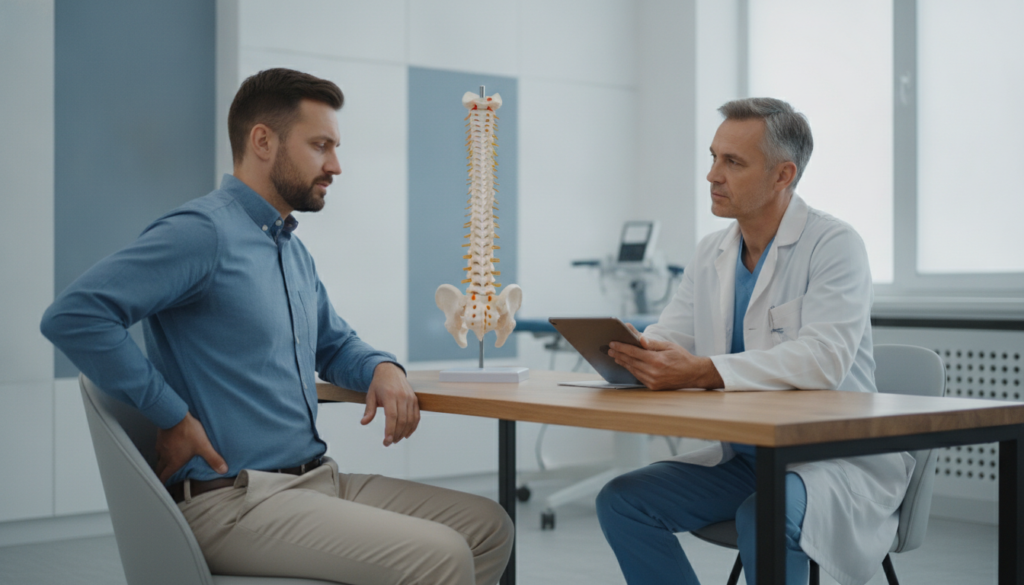
We start by asking exactly where the pain travels. Does it stop at the knee? Does it reach your big toe or the outside of your foot? This map tells us exactly which specific lumbar nerve is trapped.
A focused neurological exam
We check your reflexes, perform a straight-leg raise test, and assess the muscle strength in your legs and feet. We are looking for any signs of nerve damage, like weakness when standing on your heels or toes.
Reviewing your MRI together
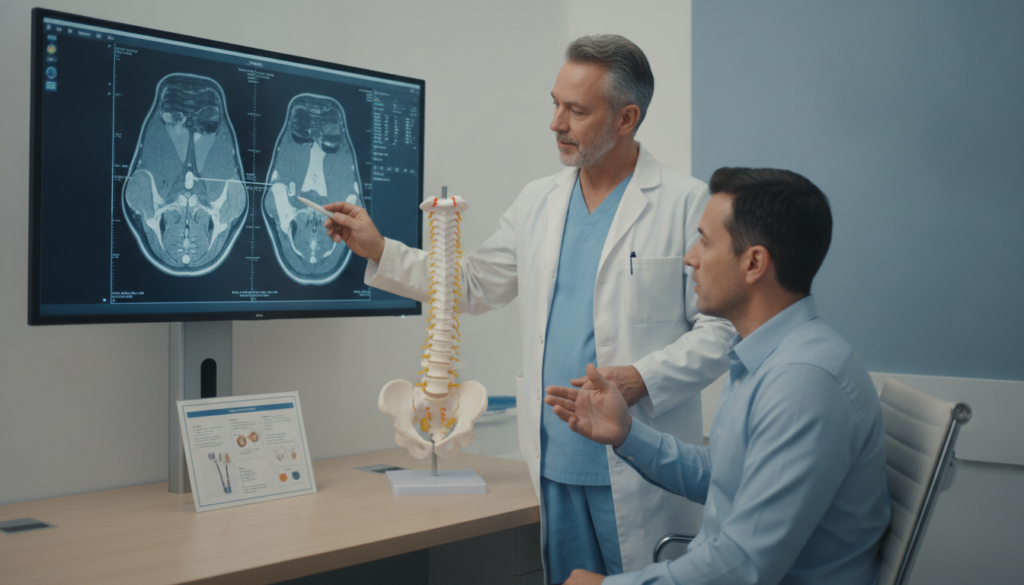
If you have an MRI, we will pull it up and show you the exact spot. You will see the herniated disc or bone spur that is physically pressing against your sciatic nerve.
Cooling down the nerve
Often, the fastest way to get you walking comfortably again is a targeted epidural steroid injection, which delivers powerful anti-inflammatory medicine directly to the pinched nerve.
Opening the nerve space
We prescribe specialized physical therapy aimed at creating more space in the spinal canal and strengthening your core to prevent the disc from pressing back onto the nerve.
The surgical backup plan
If conservative methods fail, or if you have severe weakness like "foot drop," we will transparently discuss a microdiscectomy—a tiny, minimally invasive surgery to pluck the piece of disc off the nerve.
A few things worth knowing beforehand
Sciatica vs. Back Pain Key Concept
Standard back pain stays in your back. Sciatica is nerve pain—it travels. The sciatic nerve is the longest in the body, running from your lower back, through your buttocks, and down to your feet. That's why a lower back problem makes your leg hurt.
The 'Slipped' Disc
The most common cause of sciatica is a herniated (or slipped) lumbar disc pushing out of place and resting on the nerve. The good news? Given the right conditions, the body can often heal and retract these discs naturally over time.
Why sitting hurts more
Many sciatica patients notice the pain is worse when sitting or driving. This is because sitting puts significantly more pressure on your lower spinal discs than standing, causing the disc to squeeze the nerve harder.
Watch out for 'Red Flags'
If you suddenly lose the ability to lift your foot (foot drop), or if you lose control of your bladder or bowels, these are medical emergencies requiring immediate surgical intervention to prevent permanent nerve damage.
How to prepare
A little preparation makes the conversation easier
Bring your MRI films or disc
Because sciatica is almost always caused by a structural issue in the lower back, reviewing your recent lumbar MRI directly is the most critical part of your consultation.
Map the exact pain route
Take a moment to notice exactly where the pain goes. Does it run down the back of your thigh? Does it wrap around your shin? Does it make your big toe numb? Write this down.
List your positional triggers
Does leaning forward ease the pain? Does walking for 10 minutes force you to sit down? Note these positional changes, as they help us understand the mechanics of the compression.
Wear easily rollable pants
We will need to check the reflexes in your knees and ankles, as well as the sensation along your legs. Wearing shorts or loose pants that can be easily rolled up is very helpful.
Possible outcomes of your evaluation
Here is what your personalized path to relief might look like.
Specialized Nerve Meds
Prescribing specific medications (like gabapentin) that target nerve pain, rather than standard anti-inflammatories.
Epidural Injections
Administering targeted steroid injections to rapidly reduce the swelling around the sciatic nerve, providing fast relief.
Targeted Physical Therapy
A specialized routine to build core strength and utilize specific stretches that actively pull pressure off the sciatic nerve.
Microdiscectomy
A highly successful, minimally invasive outpatient surgery to physically remove the tiny piece of disc pressing on the nerve.

Dr. Rajesh Pathi
Dr. Pathi understands that sciatic pain can be completely debilitating. He specializes in accurately mapping lumbar nerve compression and focuses heavily on providing rapid, conservative relief. When surgery is required to free the nerve, he utilizes advanced, minimally invasive microdiscectomy techniques to ensure a fast, safe recovery.
Questions patients often have
Yes, many cases of sciatica resolve on their own within a few weeks to a few months as the body naturally reabsorbs the herniated disc material. However, medical treatment can significantly speed up this process and drastically reduce your daily suffering while it heals.
Usually, no. Surgery is generally considered a last resort if conservative treatments (like physical therapy and injections) fail after several weeks. The exception is if you develop severe muscle weakness in your leg or foot, in which case prompt surgery is needed to prevent permanent nerve damage.
A microdiscectomy is the "gold standard" surgical treatment for severe sciatica. It is a minimally invasive procedure where the surgeon uses a microscope to make a small incision and carefully remove only the tiny fragment of the herniated disc that is pinching the nerve, leaving the rest of the spine intact.
Coughing, sneezing, or even bearing down on the toilet temporarily increases the pressure inside your spinal canal. If a disc is already resting against your sciatic nerve, that sudden spike in pressure squeezes the nerve even harder, sending a sharp jolt of pain down your leg.
Stop living with shooting nerve pain.
Book a sciatica evaluation with Dr. Rajesh Pathi — find the exact pinch point and start your targeted path to relief.