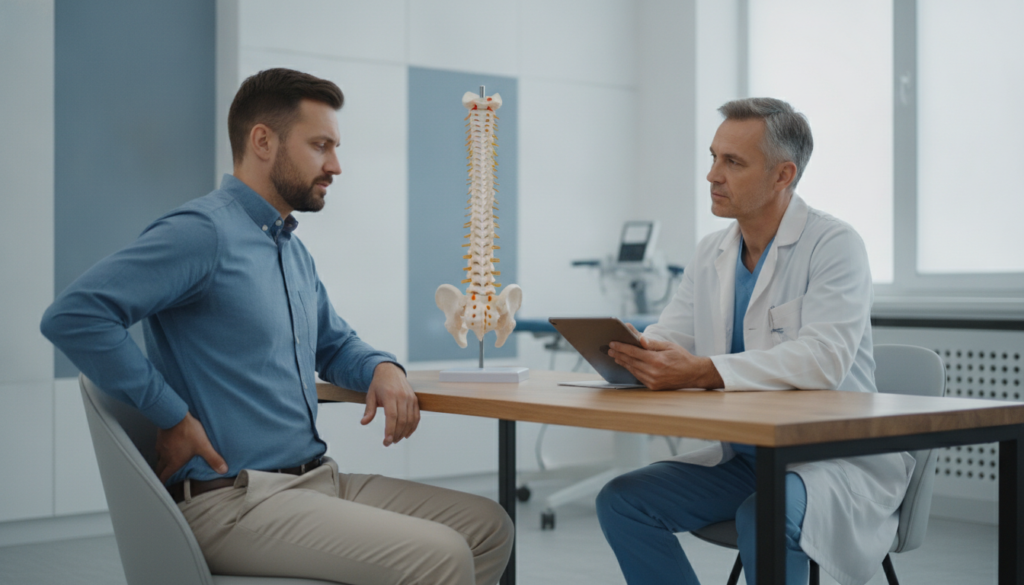
A clear, honest conversation about your spine surgery options
Whether you've been advised to have surgery or are seeking a specialized second opinion, this consultation provides absolute clarity. We walk you through the procedure, the risks, and what to expect during recovery, ensuring you make a confident decision.
Surgery is a major step, but it doesn't have to be overwhelming
The thought of spine surgery is understandably daunting. However, modern techniques have evolved dramatically. With an emphasis on Minimally Invasive Spine Surgery (MISS), we focus on smaller incisions, preserving muscle tissue, and getting you back to your life faster and safer than traditional methods.
Your consultation, step by step
Here is how we demystify the surgical process so you know exactly what is recommended and why.
Verifying the necessity
We start by confirming that surgery is truly the right next step. We review your medical history to ensure all viable conservative treatments (like injections or targeted physical therapy) have been adequately exhausted.
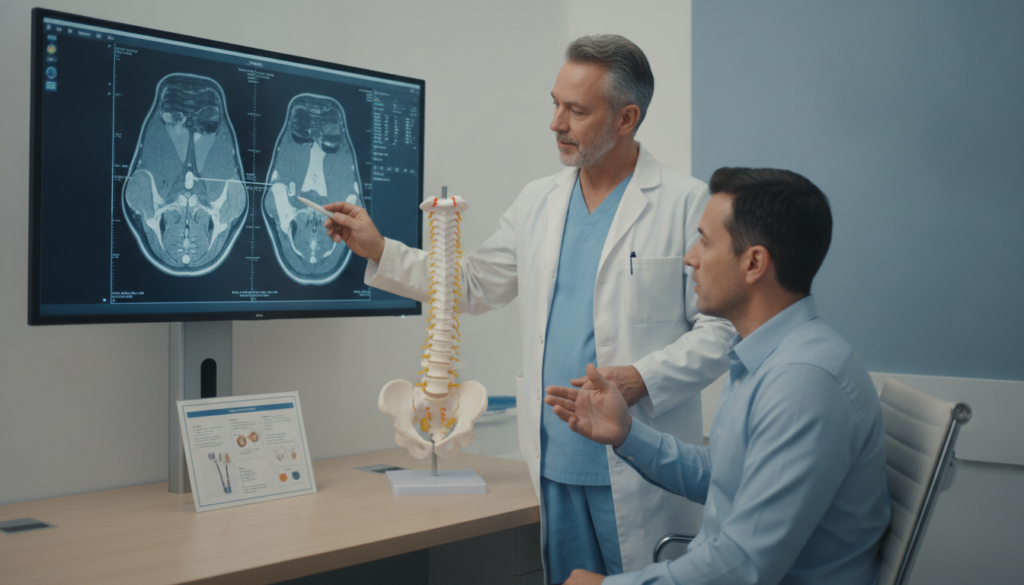
Reviewing your imaging together
We will pull up your MRI or CT scan and explain it to you directly. You will see exactly where the nerve is compressed or where the spine is unstable, so the 'why' of the surgery makes perfect sense.
Explaining the mechanics of the procedure
We detail exactly what will happen in the operating room. Whether it involves removing a piece of a herniated disc, clearing out bone spurs, or stabilizing a joint, we use simple terms, not medical jargon.
The minimally invasive advantage
Whenever possible, we explain how your procedure can be done using minimally invasive techniques (MISS), which utilize tubular retractors to gently separate muscles rather than cutting them.
Honest discussion of risks and expectations
No surgery is risk-free. We have a transparent conversation about potential complications, as well as providing a highly realistic expectation of what percentage of your pain the surgery is likely to cure.
Mapping out your recovery
You will leave knowing exactly what the days and weeks after surgery look like, including hospital stay duration, physical restrictions, and when you can expect to return to work and normal activities.
A few things worth knowing beforehand
Decompression vs. Fusion Key Concept
"Decompression" (like a microdiscectomy or laminectomy) means removing tissue or bone to make room for a pinched nerve. "Fusion" involves joining two vertebrae together to stop painful movement and provide stability.
Minimally Invasive Spine Surgery (MISS)
Traditional open surgery requires large incisions and cutting muscle away from the spine. MISS uses specialized instruments to work through small tubes, separating muscle fibers instead of cutting them, leading to much faster recoveries.
Nerve memory and healing time
While surgery immediately removes the pressure from a nerve, the nerve itself may take weeks or months to fully "forget" the trauma. Tingling or slight numbness can linger as the nerve slowly heals.
Pre-habilitation is powerful
Often, the stronger you are going into surgery, the faster you recover. We frequently discuss a "pre-hab" physical therapy routine to prepare your body for the procedure.
How to prepare
A little preparation makes the conversation easier
Bring your most recent MRI
Surgical planning requires up-to-date imaging. Please bring the actual physical films or disc of your most recent MRI or CT scan, preferably taken within the last 3-6 months.
Bring a support person
Surgical consultations involve a lot of complex information. Having a spouse, family member, or friend with you to take notes and ask questions is highly recommended.
Write down your functional goals
What are you hoping surgery will allow you to do again? Walk around the block? Sleep through the night? Play with your grandchildren? Knowing your goals helps us tailor the plan.
Prepare a comprehensive medical history
We need to know about your heart health, blood thinners, diabetes, and previous surgeries, as these directly impact anesthesia and surgical safety.
Possible outcomes of your evaluation
Here is what happens after we conclude our surgical discussion.
Surgical Scheduling
If we agree surgery is the best path, our team will coordinate dates, insurance pre-authorizations, and pre-admission testing.
A Non-Surgical Reversal
Particularly in second opinions, we may identify a conservative treatment that wasn't tried, allowing you to delay or avoid surgery.
Pre-Op Optimization
Recommending specific steps—such as adjusting medications, physical therapy, or smoking cessation—to make your surgery as safe as possible.
Time to Decide
Unless it is a medical emergency, you will never be pressured to schedule immediately. You will be given the time you need to make the right choice.

Dr. Rajesh Pathi
Dr. Pathi holds a Fellowship in Minimally Invasive Spine Surgery (FMISS). He is dedicated to employing advanced techniques that minimize tissue disruption, reduce post-operative pain, and accelerate recovery. He believes that patient education is just as important as surgical skill, ensuring you feel completely confident before entering the operating room.
Questions patients often have
All surgeries carry risks, but modern spine surgery, particularly minimally invasive approaches, is highly advanced and generally very safe. The risks of remaining in chronic pain or suffering permanent nerve damage from avoiding necessary surgery often outweigh the surgical risks, which we will discuss in detail during your visit.
This depends entirely on the procedure. Many minimally invasive decompressions (like microdiscectomies) are done as outpatient procedures or require only a one-night stay. More complex fusion surgeries may require a few days in the hospital for observation and initial physical therapy.
"Failed Back Surgery Syndrome" historically occurred when surgeries were performed for generalized back pain without a clear structural cause. When spine surgery is performed to address a highly specific, identified nerve compression or instability that matches the patient's symptoms, the success rates are very high.
Absolutely. Seeking a second opinion before undergoing spine surgery is a very smart, standard practice. We welcome second-opinion consultations and provide an objective, unbiased review of your surgical recommendations.
Make your decision with clarity and confidence.
Book a spine surgery consultation with Dr. Rajesh Pathi — understand your options, the risks, and the path to recovery.