Managing age-related wear and tear in your neck
Cervical spondylosis can cause daily stiffness, a grinding sensation, and radiating pain. We provide a focused evaluation to assess joint degeneration, relieve nerve pressure, and build a plan to restore your neck's mobility and comfort.

'Wear and tear' is natural, but living in pain is optional
Spondylosis is essentially osteoarthritis of the neck. While the structural changes in your bones and discs cannot be reversed, the symptoms are highly manageable. We focus on halting the progression, reducing nerve inflammation, and keeping you active without rushing to surgery.
Your consultation, step by step
Here is how we evaluate the extent of your cervical arthritis and build a recovery plan.
Detailing your stiffness and pain
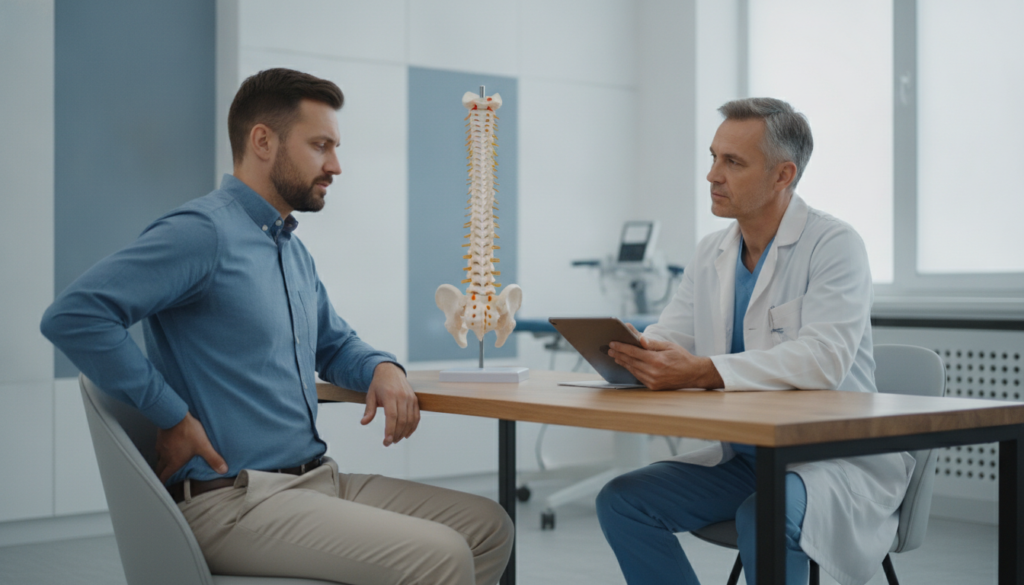
We begin by discussing your daily symptoms. Are you waking up with severe stiffness? Do you hear a grinding noise when turning your head? Do you feel tingling in your arms? These details help distinguish between joint pain and nerve pain.
A cervical neurological exam
We perform a hands-on check of your neck's mobility. We also test your arm strength, reflexes, and balance to ensure that the arthritis isn't compressing your spinal cord or exiting nerve roots.
Reviewing X-rays and MRIs
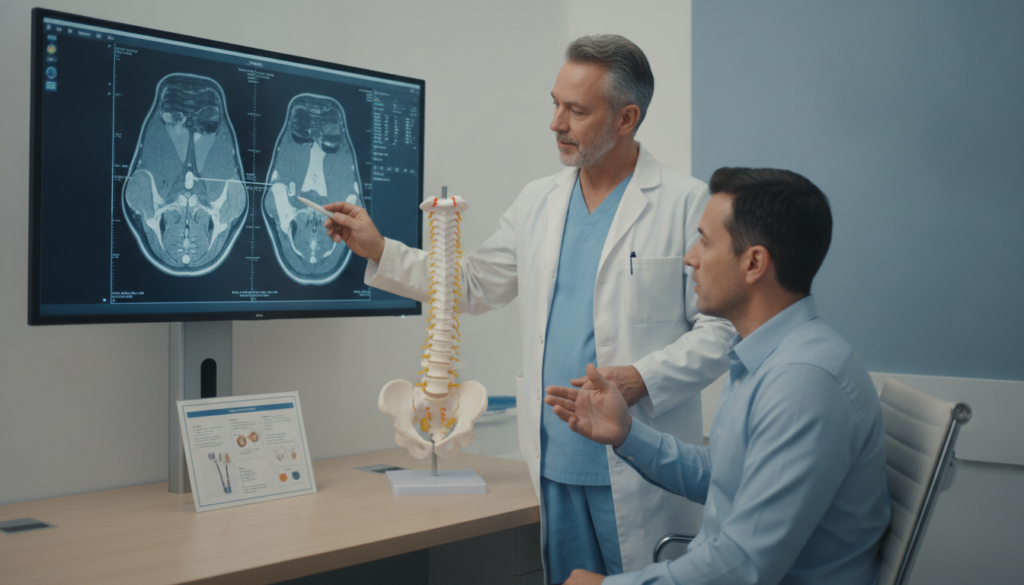
We review your imaging together. X-rays are excellent for showing bone spurs and disc height loss, while an MRI reveals exactly how much space your nerves have left.
Assessing nerve vs. joint pain
We determine if your pain is purely structural (arthritis in the facet joints) or if bone spurs have grown large enough to pinch the nerves branching down into your arms.
Designing a mobility plan
The primary treatment for spondylosis is targeted movement. We prescribe specific physical therapy, posture correction strategies, and ergonomic changes to take the stress off your neck.
Advanced options if needed
If physical therapy isn't enough, we discuss targeted facet joint injections. Surgery is only discussed if bone spurs are causing severe nerve damage or spinal cord compression.
A few things worth knowing beforehand
What is Spondylosis? Key Concept
Cervical spondylosis is the medical term for age-related osteoarthritis in the neck. Over time, the discs dry out and shrink, causing the bones to rub together and the joints to become stiff and inflamed.
The Role of Bone Spurs
As the discs shrink and the neck becomes less stable, the body tries to reinforce the spine by growing extra bone (osteophytes or bone spurs). While they add stability, they often accidentally pinch nearby nerves.
The Myelopathy Warning
If spondylosis severely narrows the main spinal canal, it can squeeze the spinal cord itself (cervical myelopathy). This is a serious condition that can cause balance issues, clumsiness in the hands, and difficulty walking.
Movement is Medicine
While resting a stiff neck feels intuitive, a rigid neck brace or prolonged inactivity actually makes spondylosis worse. Safe, guided movement is required to lubricate the joints and prevent further stiffness.
How to prepare
A little preparation makes the conversation easier
Bring past imaging
If you have X-rays, CT scans, or MRIs of your neck, please bring the actual discs or films. Comparing an old scan to a new one helps us see how fast the arthritis is progressing.
Track your symptom patterns
Note when the stiffness is worst (e.g., first thing in the morning) and if looking over your shoulder while driving causes pain or a grinding sound.
List conservative treatments tried
Write down if you've tried physical therapy, massage, anti-inflammatory medications (like ibuprofen), or heating pads, and whether they provided any relief.
Dress comfortably
We will evaluate your neck's range of motion and test the strength in your arms and hands. Wearing loose-fitting clothing makes the physical exam much easier.
Possible outcomes of your evaluation
Here is what your personalized management plan might look like.
Targeted Physical Therapy
Prescribing specific neck strengthening and gentle traction exercises to improve mobility and take pressure off the arthritic joints.
Pain Management
Utilizing targeted facet joint injections or epidurals to reduce localized joint inflammation or soothe pinched nerves.
Long-Term Ergonomics
Providing actionable advice on desk setup, sleeping posture, and daily habits to stop aggravating the wear and tear.
Surgical Discussion
Surgery is only discussed if bone spurs are severely compressing a nerve root or the spinal cord itself, causing progressive weakness.

Dr. Rajesh Pathi
Dr. Pathi understands that cervical spondylosis is a chronic condition that requires a sustainable, long-term strategy. He focuses heavily on conservative management—improving neck mechanics, reducing inflammation, and prioritizing physical therapy—ensuring surgery is only considered when strictly necessary to protect neurological function.
Questions patients often have
No, there is no "cure" for osteoarthritis. The structural changes to your discs and bones cannot be reversed. However, the symptoms are highly treatable. With the right combination of physical therapy, posture correction, and occasional pain management, most people can live active, comfortable lives.
The vast majority of patients with cervical spondylosis will never need surgery. It is only recommended if the arthritis causes bone spurs that severely pinch a nerve (causing severe arm pain/weakness) or if it narrows the spinal canal enough to squeeze the spinal cord.
That grinding, clicking, or popping sound is called "crepitus." It happens because the smooth cartilage that normally cushions your neck joints has worn away, causing rougher bone surfaces to rub against each other or ligaments to snap over the bone spurs. While it sounds alarming, it is very common and usually harmless.
While some chiropractic care can offer temporary relief, high-velocity neck manipulations can be dangerous if you have advanced spondylosis, bone spurs, or a narrowed spinal canal. We strongly recommend a full neurosurgical evaluation and imaging before undergoing any aggressive neck adjustments.
Take control of your neck pain and stiffness.
Book a cervical spondylosis evaluation with Dr. Rajesh Pathi — understand your arthritis and build a plan to stay active and comfortable.