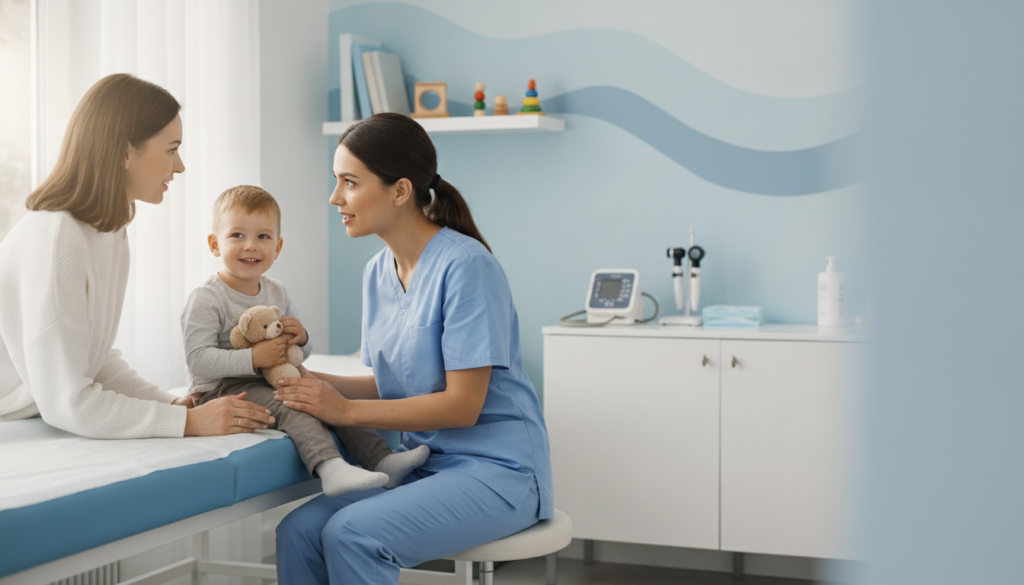
A fever is a symptom, not the illness. We're here to find the cause.
A sudden high temperature can be frightening for any parent. Dr. K. Sushma provides careful evaluation to distinguish between routine viral fevers and infections that need specific treatment, giving you clarity and peace of mind.
When a fever requires emergency care
If your child has a fever alongside any of these signs, go to the nearest emergency facility or call 108 rather than booking a routine visit.
Fevers mean the immune system is working
It’s natural to panic when your child feels hot to the touch. However, a fever itself isn't the enemy—it’s actually a sign that your child's body is actively fighting off an infection. Our goal is to safely manage their comfort while we figure out exactly what they are fighting.
Getting to the root of the temperature
Viral Fevers
Common colds, flu, and typical childhood viruses that need supportive care.
Bacterial Infections
Ear infections, strep throat, or UTIs that may require targeted antibiotics.
Tropical Fevers
Evaluation for dengue, typhoid, or malaria during peak seasonal changes.
Fever & Rash
Conditions like chickenpox, hand-foot-and-mouth disease, or roseola.
Unknown Origin
Fevers lasting more than 5-7 days that require detailed diagnostic testing.
Common reasons for a fever visit
Stubborn High Fevers
Temperatures above 102°F (38.9°C) that drop briefly with medicine but quickly spike back up.
Fever with Ear or Throat Pain
Children pulling at their ears, refusing to swallow, or complaining of a severe sore throat.
Prolonged Fevers
A low or high-grade fever that has consistently stuck around for more than 3 to 4 days.
Fever with Vomiting/Diarrhea
Worrying about dehydration because the child cannot keep fluids or fever-reducing medicine down.
Post-Vaccination Fevers
Reassurance and management for fevers that occur within 24-48 hours after routine immunizations.
Febrile Seizures
Follow-up care after a child has experienced a terrifying fever-induced seizure or shaking episode.
Your child's visit, step by step
Our priority is finding the cause without subjecting your child to unnecessary tests.
Vitals and hydration check
We immediately check their temperature, heart rate, and breathing, and assess them for signs of dehydration.
Reviewing the fever pattern
Dr. Sushma will ask exactly when it started, how high it gets, and how the child acts when the fever comes down.
A thorough, gentle exam
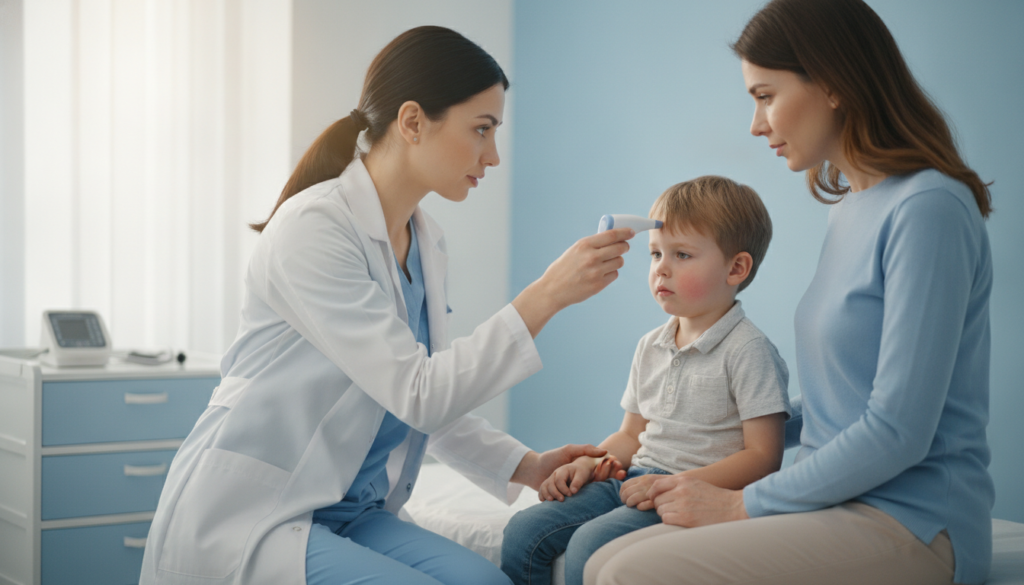
Looking closely at the throat, ears, chest, skin, and lymph nodes to identify the hidden source of the infection.
Testing only if necessary
Most fevers can be diagnosed clinically. If dengue, typhoid, or a UTI is suspected, specific, targeted lab tests will be recommended.
A clear fever management plan
You’ll get precise instructions on when and how much paracetamol or ibuprofen to give, based on your child's exact current weight.
What to bring
A little preparation helps a lot
Your fever log
Notes on what time the fever spiked, what the temperature was, and what time you gave medication.
The actual medications
Bring the exact bottles of paracetamol or ibuprofen you are using so Dr. Sushma can check the concentration (strength) and correct the dosage.
Previous lab reports
If you've already had blood or urine tests done elsewhere during this illness, bring the reports.
Vaccination card
To ensure they are protected against preventable bacterial infections like Pneumococcus and Haemophilus influenzae.
A favorite blanket or toy
Feverish children are cranky and tired. A comfort item makes the physical exam much easier for them.
If a fever triggers a seizure
Watching your child have a seizure or convulsion during a high fever (a Febrile Seizure) is terrifying for parents. While most simple febrile seizures are harmless, Anoki’s unique setup with both a Pediatrician (Dr. Sushma) and a Neurosurgeon (Dr. Pathi) under one roof means your child can be thoroughly and safely evaluated for complete peace of mind.

Dr. K. Sushma
Dr. Sushma understands that a sick, feverish child means sleepless nights for parents. She focuses on accurate diagnosis, avoiding unnecessary antibiotics for viral fevers, and giving parents the confidence to manage their child's recovery safely at home.
Questions parents often ask
Pediatricians look at the child, not just the thermometer. A child playing normally with a 102°F fever is often less concerning than a child with a 100°F fever who is extremely lethargic, refusing to drink, and hard to wake up.
No. Never use cold water, ice, or alcohol rubs. This causes shivering, which actually raises the body's internal temperature. If you sponge bathe, use lukewarm (tepid) water to gently cool the skin.
Most childhood fevers are caused by viruses (like colds and flu), which do not respond to antibiotics. Antibiotics are only prescribed if Dr. Sushma diagnoses a specific bacterial infection, like an ear infection or a UTI.
No. Fevers caused by normal childhood infections will not cause brain damage. The body's internal thermostat naturally caps the fever. Brain damage only occurs from extreme external heat (like being left in a hot car) or direct brain infections like meningitis.
It can be done safely, but it is very easy to make dosage mistakes that can harm your child. Always consult Dr. Sushma before alternating medications so she can give you a clear, safe, weight-based dosing schedule.
Don't spend another night worrying about a rising thermometer.
Book a consultation with Dr. K. Sushma at our Pragathi Nagar clinic to find out exactly what's causing the fever.